


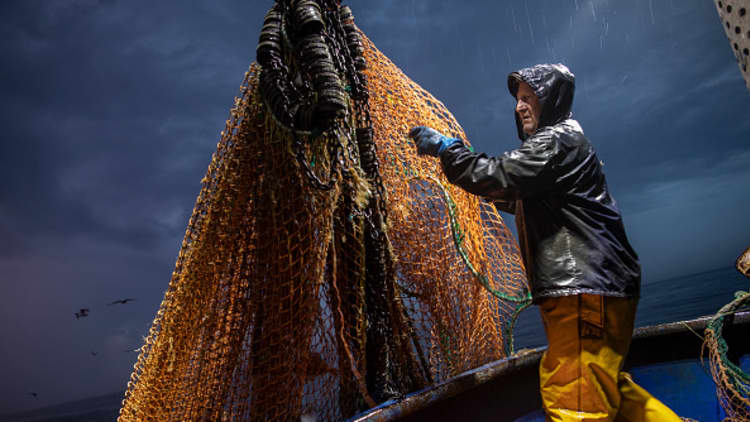
How the U.S. fixed most of its overfishing problem
The wildly diverse fishing industry may be the only food product that relies on the cycles of nature.
In 2020, the global fishing industry reached an all-time record of production worth an estimated $406 billion, according to the Food and Agriculture Organization of the United Nations.
The industry changed after the fish stock collapse in the 1990s, which was partially due to overfishing. Overfishing occurs when the fish harvest outweighs the maximum sustainable yield.
In the U.S., the National Oceanic and Atmospheric Administration estimates that 90% of fisheries are now sustainably managed. As of June 2020, 47 fish stocks have been rebuilt like the chinook salmon and Atlantic sea scallops.
What's more, Underfishing, which occurs when fish are harvested at a rate lower than would produce maximum sustainable yield, has become common in the U.S.
America imports anywhere from 70% to 85% of its seafood, according to NOAA. In 2020, the U.S. imported over 6 billion pounds of seafood worth over $21 billion, making for a national seafood trade deficit of $17 billion.
Some supply chains are murky. Many countries don't have data on trends and stocks because they don't have management systems in place, according to the FAO.
The United States imported $2.4 billion worth of seafood from illegal, unreported and unregulated fishing in 2019, accounting for about 11% of total U.S. seafood imports, according to the U.S. International Trade Commission.
Watch the video above to learn more about the U.S. fishing industry, market forces at play, the difference between overfishing and overfished, the role of climate and crime in global supply chains of seafood and what solutions may be on the table.


