


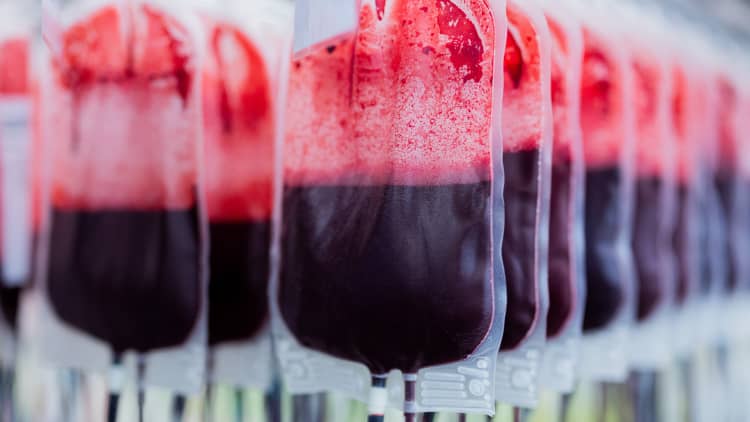
Why so many companies want your blood
In America, blood means big business. The North American blood market was valued at $3.3 billion in 2021, according to Global Market Insights Inc.
Blood makes up nearly 2.7% of U.S. exports.
Since there is no substitute for human blood, demand can be hard to meet.
During the Covid pandemic, the Red Cross announced its first-ever national blood shortage crisis.
An earlier pandemic shortage prompted the FDA to loosen its restriction, which stems from the 1980s AIDS crisis, on accepting blood donations from men who have sex with men. Advocates want the FDA to follow the science and do away with the ban altogether, as have countries such as Italy and Spain.
Grifols, CSL Plasma, Takeda's Biolife and Octapharma are huge players in the blood collection space, particularly plasma, and donors are compensated.
In most countries, blood donation for compensation is banned, but not in the U.S.
In fact, the U.S. supplies 70% of the world's plasma.
Watch the video above to learn more about how the weird economy of blood works, why the U.S. is such a major player, what makes plasma so valuable and what policies are on the table.


